Stevensons Dye Works dominated the Bullbridge area for many years.
Photo courtesy Ken Stinson

Stevenson's Dye Works was at the bottom of Bullbridge.
As James Francis Stevenson (1871-1957) grew up he helped in his father's dyeing and bleaching business, learning the processes and gradually acquiring the knowledge to run and maintain a factory. He later acquired premises on the High Street in Belper, and in 1893 F Stevenson & Company came into being. The Bullbridge site at Ambergate was acquired in 1910 and dyeing and bleaching commenced.
Mr. F M Stevenson, son of James Francis Stevenson, joined his father in 1926, by which time the privately owned company of Stevensons (Dyers) Ltd. was formed, and the dyeing of silk stockings commenced.
During the war years, Stevensons directed their energies to the dyeing and rot proofing of camouflage netting and quality control of rubberized fabrics. It was during this period the shrink resist process known world wide as DYLAN was perfected on wollen Army socks.
In the late 1940s, Stevensons returned to peacetime needs and with the introduction of the new synthetic fibre, nylon, the future looked assured. New amenities were introduced for the benefit of the employees, such as a Sports and Social Club, organising various activities on weekends and evenings. A Works Committee was inaugurated, toghether with a Charity Fund. Each employee donated 1d. per week from their wages and once a year these funds were distributed to children's organisations. In 1949 the first Children's Christmas Party was held and this soon became an annual tradition.
By 1950 the workforce had grown to 400, and at Easter 1951 the first edition of the Company magazine 'The Amberonian' was published. In December 1953, the first gold watches were presented at an informal ceremony in the works canteen to mark eight employees' twenty-one years of service. This was the foundation of the '21 Club'. The club's inaugural dinner was held at the New Bath Hotel, Matlock in April 1956.
The total number of employees had risen to over 900 by 1961. In the following year the new Hose and Half Hose Dyehouse was completed. The 1963 merger with the Nottingham Manufacturing Company proved the greatest change to this formerly family concern, facilitating plant utilisation and offering assurances of greater security and wider opportunity for employment.
Francis Malcolm Stevenson resigned in 1966, leading to a major re-organisation, when Coates Viyella Clothing acquired the company. Mr. A. Thompson became Chairman and Managing Director, with Mr. J. N. Paddison and Mr. A. Winkler becoming Assitant Managing Directors. A further four associate Directors were appointed in 1968.
In 1967 a new Hank Dyeing Machine was installed, further additions to the Transport Fleet were introduced, and construction on the new Effluent Plant began. Although June 1968 saw one of the boilers explode. While no-one was seriously injured, a great deal of damage was caused but production was only held up for a few days.
In 1970 a second subsidary company was formed as Somercotes, named Stevensons (Fabric) Dyers to specialise in the dyeing and finishing of continuous knitted fabrics. By this time, the company employed more than 1,400 people and was the biggest dyeing company in the country.
After more than 110 years of production, Stevensons Dye Works closed in December 2006. By March 2007 some of the machines had been exported abroad and the scrap merchants had moved in.
The above articles was in the Derbyshire Record Office, Matlock
On the website DERILICTPLACES is a 2006 article about the demise of Stevensons. This is an edited version of that article.
Stevensons Dyers: Competition killed Europe's premier dyeing company. It had provided generations with secure jobs and good prospects. It closed its gates for the last time in 2006. Pat Parkin reports on the rise and fall of the company which was once Europe’s biggest dyeing house.
After more than a century of dyeing garments for some of Britain’s best-known companies, including Marks and Spencer, Stevensons (Dyers) Ltd has, like so many others before it, had to give in to the pressure of competition from abroad.
Though the factory at Bullbridge, Ambergate, is just over 100 years old, the Stevenson name has been associated with the dyeing business in Derbyshire for nearly two centuries.
In its heyday in 1970, Stevensons employed more than 1,400 people and millions of garments passed through the factory on their way to high street fashion shops. It was the country’s biggest dyeing company, though now only eighty staff remain, and most of them will be made redundant at the end of the year.
Stevensons’ history is written into almost every home in the area, for numerous members of the same families have worked there and many have spent all their working lives at the factory.
People travelled from Ripley, Belper, Crich, Bullbridge and Sawmills, Heage, Ambergate, Fritchley and Swanwick, to apply for jobs there for not only were the wages good but it was well-known that the working conditions were excellent.
The Stevenson family had a close relationship with their workers, who included mothers and sons, fathers and daughters, and brothers and sisters – and there were always celebrations of special events.
As well as working with their own relatives at the factory, many of the employees worked alongside people they subsequently married. In 1963 alone, there were 30 engagements, 15 weddings and 24 births to celebrate.
The Stevensons encouraged friendships among their workers who were able to join countless clubs and societies set up for sport, hobbies and social interests.
Peggy Henson, of Ambergate, is the last of eleven members of her family to work at Stevensons and will soon complete 27 years’ service, during which she has returned five times to work in both the factory and the offices.
“But we are not unique,” she said. “Lots of families around here have had several people at the factory. It was very convenient because you could work shifts and lots of women returned again and again after they had had children.
“It was a lovely place to work. Everyone would comment how friendly people were. Everyone knew everyone else and the bosses knew us all. It’s really sad it is all coming to an end.”
Peggy is now collating the company’s history and collecting photographs from ex-employees and bosses.
“We need to save these mementoes and memories for future generations. This has been a very important company to many, many people and it should not be forgotten. When it is completed, it will go to the Derbyshire Records Office in Matlock, ” she added.
Included in her research were the memories of Elsie Mills, who worked there during the First World War, staying for 48 years and only retiring when she reached the age of 80.
She recalled one of the Stevenson family who “did his whack” working with the dyers in overalls and clogs all day long. “Mr Stevenson set himself to achieve a great future and great works from very small beginnings, and we must all take our hats off to him for he has lived to see and enjoy it all,” she later wrote in the works magazine.
Stevensons remained in family ownership until 1966, when it was acquired by Coats Viyella Clothing. At the time, it was Europe’s biggest dyeing and finishing house and they called it “one of the brightest jewels” in their crown.
Six years ago, it became part of the Quantum Clothing Group and, despite great efforts by management to keep its business going, it became obvious that things were running down.
Said commercial director Mike Carrington, who has worked for the company for nearly 40 years: “Over the past six years, the industry in the UK has undergone a dramatic decline. It will be a very sad day when the end comes, especially when we have been at the vanguard of development in the dyeing industry.
“We have pioneered many new ideas, kept way ahead in the technology field and have always had a loyal and hardworking staff.
“Unfortunately, we are the victims of dramatic changes in the demands of the textile and retail industries which constantly look for cheaper and cheaper products. We have tried to be as flexible as possible but our customers have decided to go to the Far East.”
Stevensons, however will not disappear altogether, though it will vacate its present huge plant at Bullbridge. It owns a knitwear company and plans to build a small dye house to handle that work and has set up an international company which will hopefully work abroad.
Photo from the George Smith collection courtesy Stan Smith

Aerial View of the Dye Works taken from the top of the chimney just before it was demolished.
Taken
by George Smith in about 1945.

Aerial view of Bullbridge, Stevensons is bottom right

Aerial view showing the chimney before its demolition
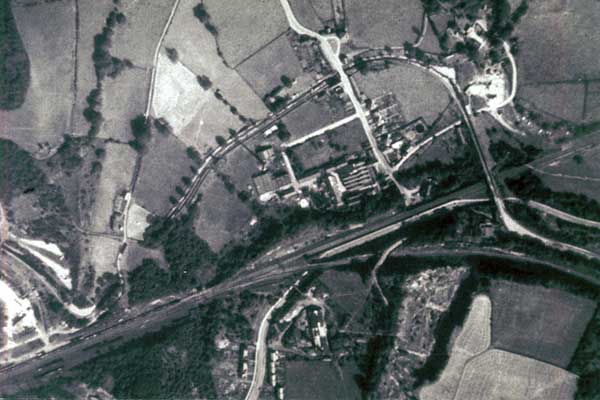
Aerial view of Bullbridge with Stevensons' dye works central
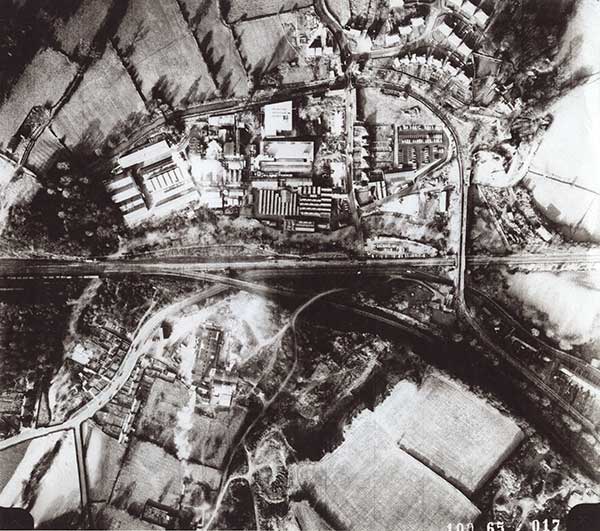
Aerial view of Bullbridge
Stevensons' dye works
centre with Cromford Canal crossing the A610 to the right
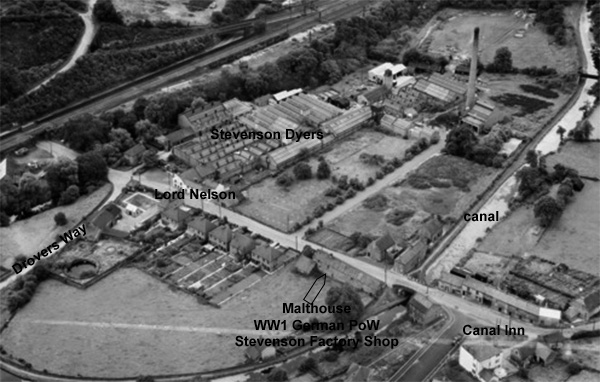
Stevensons had a factory outlet shop on the opposite side of Bullbridge Road in what was once a malthouse and a PoW holding camp for German Prisoners of War in WW1.
photo courtesy of Stan Smith

The old malthouse has been redeveloped
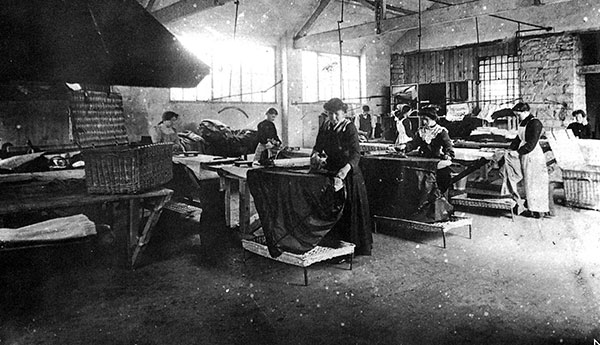
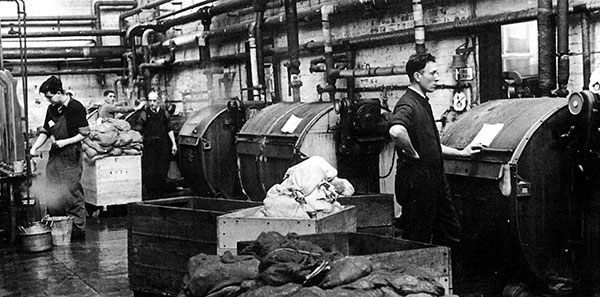
Rod JEWEL has two excellent books entitled "Images of Ambergate and Belper" and 'Memory Lane Belper, Ambergate and District". These contain many photographs and general information about the area. In his books are photographs and information about Stevensons Dyers, including the ones below taken from those books.
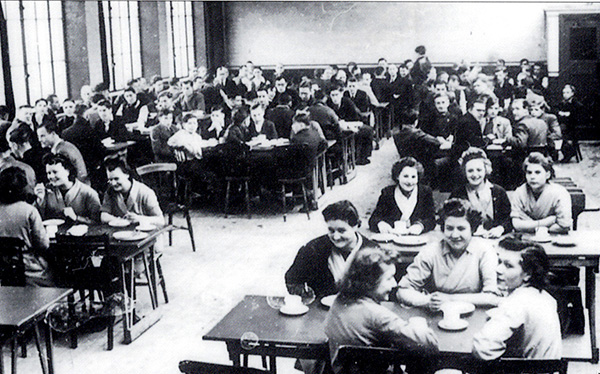
1940s Stevensons canteen
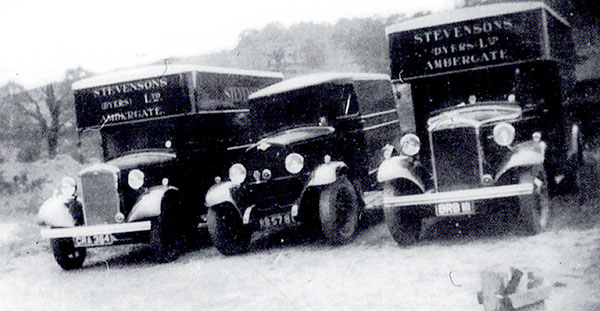
1940s Stevensons transport
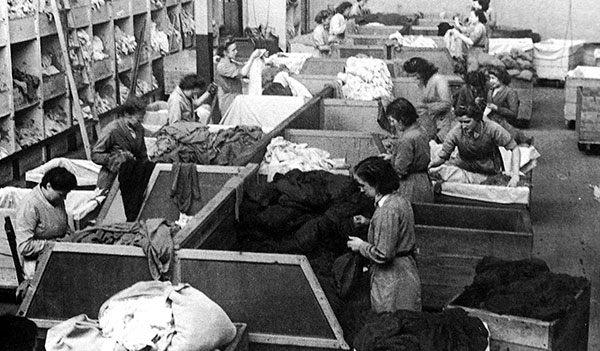
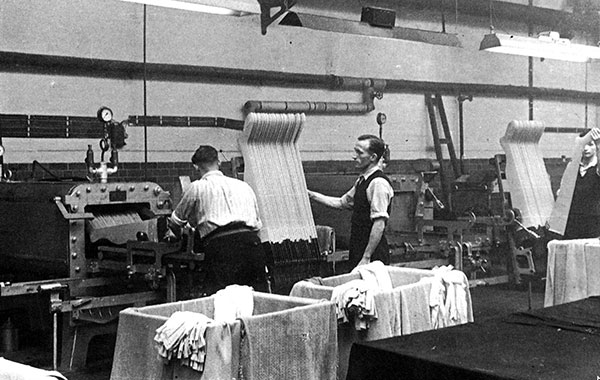
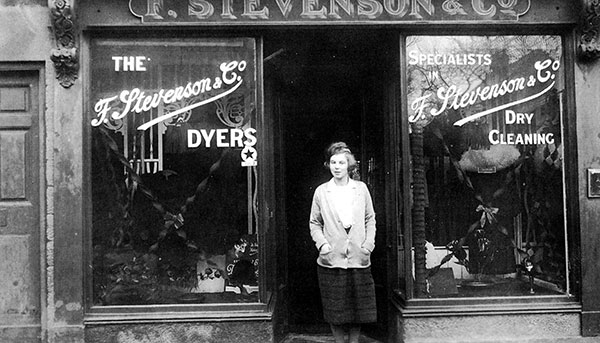
One of the many Stevenson shops, this one on King Street Belper
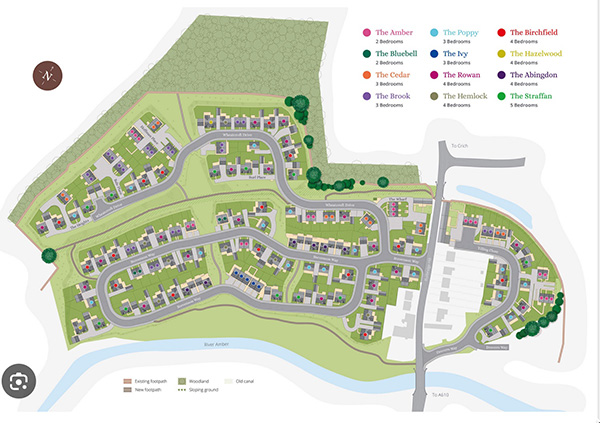
Since the early 2020s the site of Stevensons has become the Woodlands Heights housing development.